

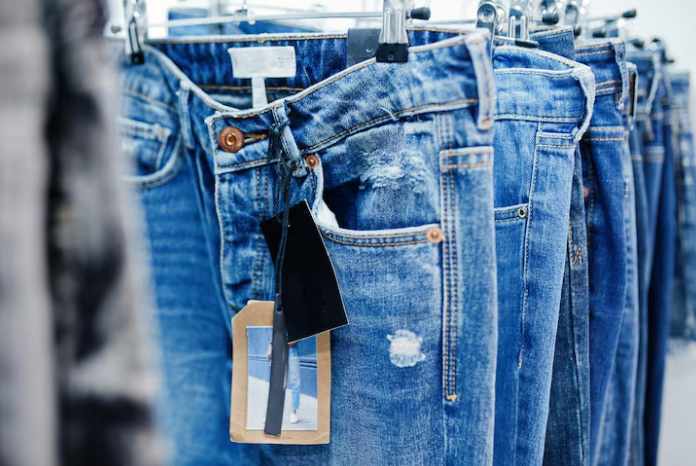
Walking into a jeans store can feel overwhelming. Skinny, slim, straight, relaxed, bootcut, high-rise, mid-rise, low-rise—the words blur together. You grab five pairs, try them on, and walk out with the same style you always buy, even though you are not sure it is actually flattering.
Here is the truth: There is a perfect pair of jeans for every body. You just need to understand three things: rise, fit, and fabric.
This guide ignores fashion trends (sorry, extreme wide-leg lovers) and focuses on what works. By the end, you will know exactly which cuts to grab and which to leave on the rack.
Step 1: Know Your Three Numbers
Forget the waist size for a moment. Jeans fit depends on three specific measurements:
- Rise: The distance from the crotch seam to the top of the waistband. This determines where the jeans sit on your torso.
- Inseam: The length from the crotch seam to the hem. This determines where the jeans hit your ankle or shoe.
- Thigh circumference: The width around your upper leg. This is the number most people ignore—and the reason jeans feel tight in the legs even when the waist is loose.
Quick tip: Measure a pair of jeans that already fit you well (not your favorite stretched-out pair). Lay them flat and measure across the waistband, the rise, and the thigh. Bring that tape measure to the store.
Step 2: Choose Your Rise (The Most Important Decision)
The rise changes everything about how jeans look and feel.
High-Rise (10–12 inches)
- Sits at or above your belly button.
- Best for: Tucking in shirts, avoiding muffin top, creating longer-looking legs. Excellent for hourglass and apple shapes.
- Avoid if: You have a very short torso (high-rise will hit your ribs) or you dislike fabric covering your stomach.
- Style note: High-rise jeans look great with cropped tops or tucked-in blouses. Avoid bulky sweaters tucked into high-rise—it adds bulk at the midsection.
Mid-Rise (8–9 inches)
- Sits just below your belly button, above your hip bones.
- Best for: Most body types. The safest, most versatile option. Works for pear shapes and athletic builds.
- Avoid if: You are very tall (mid-rise can feel like low-rise on a long torso) or very short (mid-rise can cut you off at an awkward point).
- Style note: Mid-rise is the “jeans and a t-shirt” sweet spot. Works with everything.
Low-Rise (7 inches or less)
- Sits on your hip bones, well below the belly button.
- Best for: Very straight, athletic bodies with minimal hip-to-waist difference. Also for showing off a defined waist.
- Avoid if: You have any lower belly softness (low-rise accentuates it), a long torso (low-rise makes legs look shorter), or you sit down often (low-rise exposes your back).
- Style note: Low-rise is making a comeback, but proceed with caution. Only buy if you genuinely love the look, not because it is trendy.
Step 3: Select Your Fit (Leg Shape)
This is where most people get stuck. Here is the honest breakdown of every major cut.
| Fit | Description | Best For | Avoid If |
|---|---|---|---|
| Skinny | Tight from hip to ankle | Lean, straight bodies; tucking into boots | Muscular calves or thighs (skinny jeans become sausage casings) |
| Slim | Close-fitting but not tight; slightly tapered | Most body types; the most universally flattering | You prefer a relaxed feel; you have very wide hips |
| Straight | Same width from knee to ankle; classic | Tall frames; balancing broad shoulders; vintage lovers | You are short (straight jeans can overwhelm a petite frame) |
| Athletic | Loose in thigh and seat, tapered at ankle | Muscular thighs, large calves, weightlifters, cyclists | You have skinny legs (you will swim in them) |
| Relaxed | Loose everywhere, slight taper | Casual comfort; layering over thermals | You want a polished look (relaxed reads as sloppy to some) |
| Bootcut | Fitted to knee, slightly flares at ankle | Wearing boots (the clue is in the name); balancing wider hips | Short inseams (the flare can drag on the ground) |
| Wide-Leg | Loose from hip to hem; no taper | Creating drama; balancing a very small waist; warm weather | Petite or curvy (wide-leg can look like a sack) |
The Honest Truth About Skinny Jeans
Skinny jeans dominated for a decade. They are no longer the only option. Today, slim straight and athletic fits are replacing skinny as the everyday default. Do not throw away your skinny jeans if you love them. But if you have been wearing them out of habit, try a slim straight. You might be surprised.
Step 4: Understand Fabric (Stretch vs. Rigid)
Jeans are made of denim: cotton with a weave. But modern jeans add stretch.
100% Cotton (Rigid / Raw Denim)
- Feels: Stiff at first. Breaks in over time to mold to your body.
- Pros: Lasts for years, looks better with age, holds its shape.
- Cons: Uncomfortable for the first 10 wears; no give when sitting.
- Best for: Denim enthusiasts; people who wear jeans once a week (not daily).
1–2% Elastane / Spandex (Light Stretch)
- Feels: Comfortable but structured. Holds its shape for a full day.
- Pros: The sweet spot. Moves with you without bagging out.
- Cons: Slightly less durable than 100% cotton.
- Best for: Almost everyone. Look for 98–99% cotton, 1–2% elastane.
3–5% Elastane (High Stretch / Jegging)
- Feels: Like soft leggings that look like jeans. Very forgiving.
- Pros: Incredibly comfortable; fits a range of sizes; no break-in period.
- Cons: Bag out after a few hours; less durable; can look cheap.
- Best for: Travel; long flights; days when bloating is an issue.
The rule: More stretch = more comfort but shorter lifespan. Less stretch = more structure but stiffer break-in. Most people should aim for light stretch (1–2%).
Step 5: Match Jeans to Your Body Type
Let us get practical. Find your description below.
For Pear Shapes (Wider hips, narrower shoulders)
- Goal: Balance wider hips with your upper body.
- Best rises: Mid-rise or high-rise (low-rise will emphasize hips).
- Best fits: Bootcut, straight, or athletic. These fits balance the hips without clinging.
- Avoid: Skinny (accentuates hip width) and very low-rise (creates a “shelf” effect).
- Pro tip: Dark washes on the bottom, lighter tops to draw the eye up.
For Apple Shapes (Weight carried in midsection; slimmer legs)
- Goal: Do not squeeze the midsection. Create length.
- Best rises: High-rise (holds everything in smoothly) or mid-rise.
- Best fits: Straight or slim straight. Avoid skinny (creates a lollipop effect: wide top, skinny bottom).
- Avoid: Low-rise (creates overhang) and extreme high-stretch (stretch hugs every curve, including the ones you want to minimize).
- Pro tip: Look for rigid or light-stretch denim with a firm waistband. Soft jeggings will not hold you in.
For Athletic / Rectangle Shapes (Shoulders and hips aligned; little waist definition)
- Goal: Create the illusion of curves.
- Best rises: Mid-rise or low-rise.
- Best fits: Bootcut (adds curve at the hip line), high-rise skinny (adds shape), or anything with back pocket detailing.
- Avoid: Baggy or wide-leg (swallows a straight frame).
- Pro tip: Look for jeans with curved side seams or angled back pockets (these lift and shape the rear visually).
For Hourglass Shapes (Bust and hips aligned; defined waist)
- Goal: Show off the waist without squeezing the hips.
- Best rises: High-rise (cinches the waist) or mid-rise.
- Best fits: Anything with a curved waistband. Straight, bootcut, or slim. Avoid stiff, rigid denim (it fights your curves).
- Avoid: Low-rise (creates a gap at the lower back) and baggy (hides your shape).
- Pro tip: You may always have a gap at the waist if buying straight sizes. Look for “curvy fit” lines (Levi’s Curvy, Madewell Curvy) that add inches at the hip but keep the waist smaller.
For Petite Frames (Under 5’4″)
- Goal: Do not cut you off. Elongate the leg.
- Best rises: High-rise (makes legs look longer).
- Best fits: Straight, slim, or cropped (ankle-length jeans are your best friend—no hemming needed).
- Avoid: Wide-leg (overwhelms small frames) and very long inseams (puddling at the ankle shortens you).
- Pro tip: Buy “ankle length” or “cropped” jeans. They will hit you at full length.
For Tall Frames (Over 5’8″)
- Goal: Avoid the dreaded “high-water” look (jeans ending two inches above your shoe).
- Best rises: Mid-rise or high-rise (low-rise on a tall torso looks like you forgot pants).
- Best fits: Anything, but look for “tall” or “long” inseam sizes (34–36 inches).
- Avoid: Petite or cropped sizes (they become capris).
- Pro tip: Many brands offer free hemming. For tall frames, you want minimal break (the fold of fabric at the shoe). Straight and wide-leg looks excellent on long legs.
Step 6: The Wash (Color Matters More Than You Think)
The color of your jeans changes their formality and slimming effect.
- Dark wash (indigo, deep blue, black): Most slimming. Most versatile. Can be dressed up with a blazer. Hides stains. Every wardrobe needs one dark pair.
- Medium wash (classic blue): The everyday jean. Casual but not sloppy. Shows fading and character over time.
- Light wash (faded, pale blue): Casual only. Best for summer, weekends, and young looks. Can look dated if too distressed.
- Black / Charcoal: Dressiest option. Works for nights out. Shows lint and pet hair immediately.
- White / Cream: Summer staple. Shows everything. Requires confidence and careful laundering.
The rule: Start with dark wash. Add medium. Add light or black if you have budget.
Step 7: The 5-Second Try-On Test
When you are in the dressing room, do not just look in the mirror. Do these three tests:
- The Sit Test: Sit down in the jeans. If they pinch behind your knees or dig into your lower belly, they are too tight. You sit more than you stand.
- The Finger Test: Put two fingers inside the waistband. If you cannot fit two fingers, they are too tight. If you can fit your whole fist, they are too loose.
- The Squat Test: Squat down (or lift one knee to your chest). If the crotch seams strain or the jeans ride down your back, the rise or thigh is wrong.
The mirror is a liar. Move your body. That is the real test.
Common Mistakes to Avoid
1. Buying for your “goal weight”
Buy jeans that fit you today. A pair that is too tight will stretch unevenly, blow out at the seams, and make you feel bad every time you put them on.
2. Ignoring the back pockets
Small, high pockets make your rear look lifted and round. Large, low pockets make your rear look flat and droopy. Check the pocket placement before buying.
3. Forgetting about hemming
Jeans that pool at your ankles look sloppy. A $15 hemming job at a tailor transforms $50 jeans into $200-looking jeans. If the waist fits but the length is wrong, buy them and get them hemmed.
4. Believing your size number
Vanity sizing is real. A size 28 in one brand is a size 31 in another. Ignore the number. Only care about how the jeans feel.
The Ultimate Cheat Sheet
| If you want… | Buy this… |
|---|---|
| A pair for work (business casual) | Dark wash, straight or slim, mid-rise, 98% cotton |
| A pair for weekends | Medium wash, straight or athletic, high-rise, 2% stretch |
| A pair for nights out | Black or charcoal, slim or skinny, high-rise, 1% stretch |
| A pair that lasts 5+ years | 100% cotton, straight, dark wash (break it in yourself) |
| A pair for travel/flights | High-stretch (3–4% elastane), mid-rise, dark wash |
| A pair for muscular thighs | Athletic fit, straight leg, 2% stretch |
The Bottom Line
Perfect jeans exist. They are not the ones that look best on the hanger or the ones your friend swears by. They are the ones that pass the sit test, fit two fingers in the waist, and make you forget you are wearing them by 2 PM.
Your next step: Go to a store with a wide return policy (Amazon, Zappos, Nordstrom). Order three different fits in your estimated size. Keep the one that passes the three tests. Return the rest.
And remember: jeans stretch about half a size with wear. If they are snug but comfortable at the store, they will be perfect after three wears. If you need to lie down to button them, size up.
The golden rule: Fit the biggest part of your body (hips or thighs), tailor the rest.

Dexter Harlow lives and breathes celebrity culture. From red carpet moments to the latest viral gossip, he brings Hollywood to your screen with flair and insider insight. Known for his sharp wit and captivating storytelling, Dexter keeps fans hooked, delivering the hottest entertainment news before anyone else.