
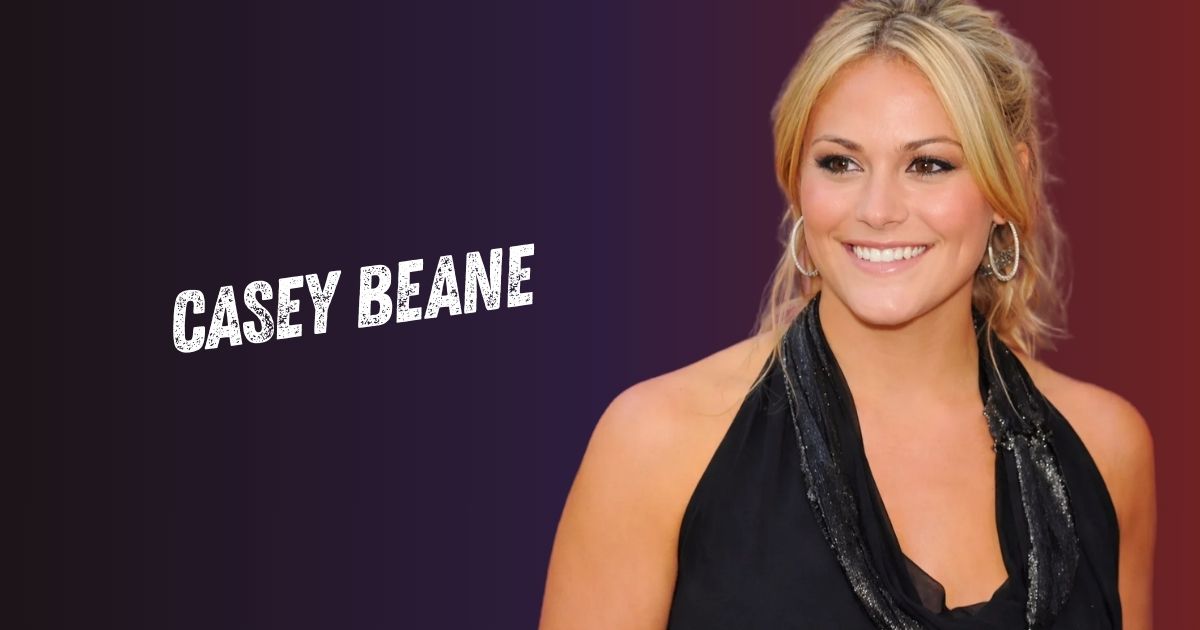

Most people stumble across the name Casey Beane while rewatching Moneyball and wondering: who is the real person behind that touching daughter character? It’s a fair question. The film made Billy Beane a household name but left his actual daughter largely in the shadows, which, as it turns out, is exactly how she prefers it.
Casey Beane’s story isn’t about fame or baseball statistics. It’s about growing up close to a data-driven baseball revolution, watching her father reshape Major League Baseball, and still choosing a life defined by privacy, independence, and quiet purpose. That contrast makes her story genuinely worth understanding.
Early Life and Family Roots: Casey Beane’s Background and Childhood
Casey Beane was born in the early 1990s to Billy Beane and his first wife, Cathy Sturdivant. Her arrival coincided with a pivotal shift in her father’s life, Billy was transitioning from a disappointing playing career into a front-office role that would eventually transform professional baseball forever. The Moneyball era family story begins right here, in those quiet early years.
Despite Billy’s growing reputation within the Oakland Athletics front office, Casey’s upbringing stayed deliberately private. Her parents eventually divorced but both remained involved. There were no press appearances, no photo opportunities, no strategic family branding. Just a child being raised with clear, firm boundaries around public life.
This private upbringing in a sports family shaped everything that followed. Casey didn’t see celebrity as a birthright. She saw it as background noise, something happening around her father’s professional world, not something that defined her own identity. That foundation proved remarkably durable.
Read More: Sophie Turner Height and How It Boosts Her Celebrity Charm
Growing Up Alongside the Rise of Moneyball
The Oakland A’s Moneyball strategy didn’t happen overnight. Throughout Casey’s childhood and teenage years, Billy Beane was quietly dismantling conventional baseball wisdom, replacing gut instinct with baseball sabermetrics strategy and data-driven talent evaluation. The baseball world was watching. Casey was watching too, just from a very different angle.
Where analysts debated baseball payroll efficiency models and MLB front office transformation, Casey experienced something simpler: a dad who worked long hours trying to keep a small-market team competitive. The baseball analytics movement that journalists celebrated was, in her daily reality, just her father’s job.
What’s striking about this period is the contrast. Externally, the sports analytics revolution was building momentum and turning Billy Beane into a visionary. Internally, the Beane household maintained normalcy. Casey wasn’t groomed for sports management or positioned as part of a baseball innovation legacy. She was just a kid growing up in California.
Education and Personal Independence: Casey Beane’s Journey to Kenyon College
When it came time for college, Casey Beane made a choice that spoke volumes. She enrolled at Kenyon College, a well-regarded liberal arts education institution in Gambier, Ohio. That’s roughly 2,400 miles from Oakland. The distance wasn’t accidental.
Kenyon is known for intellectual rigor, strong humanities programs, and producing independent thinkers. It’s not a pipeline to ESPN or MLB front offices. Choosing it reflected a Casey Beane education journey focused on personal development rather than capitalizing on her family name. She didn’t leverage her background, she quietly stepped away from it.
Her time at Kenyon reinforced a pattern already visible in her childhood. No public positioning. No name-dropping. Just a young woman building her own perspective, far from the professional baseball history narrative that surrounded her father’s career. That kind of intentional independence is rarer than it sounds.
Casey Beane and the Moneyball Film: Real Person vs. Dramatized Character
The 2011 film Moneyball changed everything, at least in terms of public awareness. Kerris Dorsey’s portrayal of Billy Beane’s daughter introduced millions of viewers to the idea of Casey Beane. The singing scene especially landed hard emotionally and remains one of the film’s most memorable moments.
But here’s what matters: that was a dramatized movie character, not a documentary. Film adaptation of real events always involves compression, invention, and narrative shaping. The real vs dramatized portrayal gap is significant. Timelines shift. Emotional beats get manufactured. Relationships get simplified to serve a two-hour story arc.
The real Casey Beane never commented on the film publicly. No interviews. No social media reaction. No clarification of what the movie got right or wrong. That silence was entirely consistent with her lifelong approach to public attention. The Moneyball cultural impact reached millions, but it didn’t pull Casey into the spotlight she’d spent her whole life avoiding.
The Boston Red Sox Decision and Family Influence on Billy Beane’s Career
In 2002, the Boston Red Sox executive offer arrived, and it was serious. The position promised Billy Beane a significant financial upgrade, a larger market, and a prestigious new challenge. By any conventional professional measure, accepting made complete sense.
He turned it down. And family influence on career decisions was a documented, central reason why. Staying close to Casey factored meaningfully into Billy’s thinking. This wasn’t vague sentiment. Reports from that period consistently pointed to father-daughter relationship in sports as a genuine driver behind the Billy Beane career decision to remain in Oakland.
Here’s why that matters beyond sentiment:
- The Red Sox went on to win the 2004 World Series, their first in 86 years
- Billy Beane’s Oakland tenure continued shaping MLB innovation leadership
- That single decision altered two franchises’ trajectories simultaneously
- Casey’s presence in her father’s life quietly influenced baseball history without her ever seeking credit for it
That’s real influence. Invisible, undocumented, but absolutely real.Life Away From Public Attention: Casey Beane’s Adult Privacy Choice
After Kenyon, Casey Beane’s adulthood unfolded entirely outside public view. There’s no verified career in entertainment, sports management, media, or any publicly visible industry. No confirmed social media presence dominates search results. No documentary appearances. No carefully timed profile pieces designed to capitalize on her father’s fame.
In today’s digital environment, that’s genuinely unusual. The private life of celebrity children is increasingly hard to maintain when social media rewards visibility and audiences expect access. Casey’s consistent absence from all of it suggests active, deliberate choice, not oversight.
Life after the Moneyball film could have been an open door to visibility. The film’s success created genuine public curiosity about the real Casey Beane. She didn’t walk through it. That restraint, maintained across years and across a shifting media landscape, defines her adult life more clearly than any career detail could.
Public Curiosity and Online Speculation About Casey Beane
When a real person behind a movie character becomes culturally visible, the internet fills the information gap aggressively. Celebrity child biography searches generate speculation fast. Claims about Casey Beane’s career, wealth, and lifestyle circulate online, most without credible sourcing.
This is a familiar dynamic. Media portrayal vs reality creates a curiosity loop: the film shows a version of someone, audiences want to know what happened next, and when no information exists, assumptions rush in to fill the void. Repeated often enough, those assumptions start looking like facts.
The honest answer is simpler than the speculation suggests. Casey Beane has chosen privacy in the digital age as a conscious lifestyle. The absence of information isn’t a mystery to crack, it’s a boundary to respect. Responsible coverage means acknowledging what isn’t known rather than inventing narratives to satisfy curiosity.
Relationship With Legacy and Fame: Casey Beane’s Quiet Connection to Baseball History
Growing up inside the baseball innovation legacy Billy Beane built gives Casey a perspective almost nobody else shares. She watched professional sports transformation happen from the inside. She saw how MLB historical decisions get made, how innovation attracts resistance, and how public success often arrives with private sacrifice.
Yet she never adopted a public role within that story. Her relationship with her father’s legacy remains personal rather than performative. No memoir. No speaking circuit. No consulting role at an analytics firm designed to trade on the Beane name.
This challenges a common assumption, that sports executive legacy naturally flows to children through visibility or career continuation. Casey demonstrates something quieter: legacy can live in relationships, in values, in the private choices that never make headlines. Her life is genuinely shaped by that inheritance. It just doesn’t look the way audiences expect.
Casey Beane Today: What We Know About Billy Beane’s Daughter Now
Casey Beane’s current life remains largely outside verified public knowledge. Her name surfaces occasionally in Moneyball retrospectives or Billy Beane Oakland Athletics tenure retrospectives but she doesn’t shape those narratives herself. She doesn’t participate. She doesn’t correct the record. She doesn’t perform privacy, she simply lives it.
What’s confirmed is limited but telling. She attended Kenyon College. She influenced a landmark career decision through her proximity to her father. She consistently declined every implicit invitation to step into public life. That consistency across decades is itself a form of self-definition.
For readers wanting a dramatic update, a career reveal, a social media account, a tell-all interview, the honest answer is that none exists. And that’s not a failure of research. It’s evidence of someone successfully living exactly the life they chose.
FAQ’s
Who is Casey Beane?
Casey Beane is Billy Beane’s daughter, born in the early 1990s. She’s known for inspiring a memorable character in the 2011 film Moneyball.
Who played Casey Beane in Moneyball?
Actress Kerris Dorsey portrayed Casey Beane in the 2011 film. Her emotional singing scene became one of Moneyball’s most beloved and remembered moments.
Did Casey Beane influence Billy Beane’s Boston Red Sox decision?
Yes. In 2002, Billy Beane turned down Boston’s executive offer largely to stay close to Casey, a decision that reshaped baseball history forever.
Where did Casey Beane go to college?
Casey Beane attended Kenyon College in Ohio, a respected liberal arts institution. She chose it far from Oakland, building independence away from baseball’s spotlight.
What is Casey Beane doing today?
Casey Beane lives privately away from public attention. She hasn’t pursued fame, media roles, or visibility despite her father’s legendary status in professional baseball.
Conclusion
Casey Beane’s biography isn’t a story of celebrity. It’s a story of proximity to history without being consumed by it. Born into the Moneyball era family story, raised with clear boundaries, educated independently, and consistently private as an adult, her path reflects deliberate, values-driven choices at every stage.
Her indirect influence on baseball history turning points is real and documented. But perhaps her most lasting contribution is simpler: proving that not every meaningful life needs public documentation. In a world that rewards visibility above almost everything else, Casey Beane’s quiet, self-possessed path is its own kind of statement.

Dexter Harlow lives and breathes celebrity culture. From red carpet moments to the latest viral gossip, he brings Hollywood to your screen with flair and insider insight. Known for his sharp wit and captivating storytelling, Dexter keeps fans hooked, delivering the hottest entertainment news before anyone else.
