

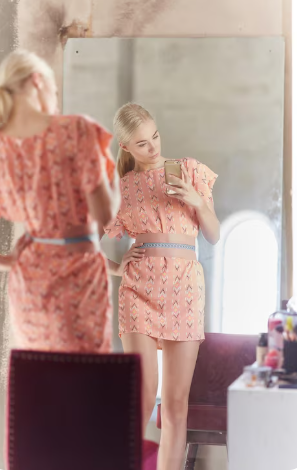
For decades, fashion magazines told you to hide your “problem areas.” Too wide here. Too narrow there. Wear black. Don’t wear horizontal stripes. It was exhausting and frankly, wrong.
Here is a better approach: dressing for your body type isn’t about hiding. It’s about balancing. It’s about highlighting what you love and creating the silhouette that makes you feel confident.
Forget rigid rules. These 5 tips will help any woman (or man) dress their unique shape with ease.
Tip 1: Identify Your Actual Shape (Ignore the Size Label)
First, forget the number on your tag. Sizes vary wildly between brands. A size 8 in one store is a size 4 in another. Focus on shape, not size.
How to find your body type:
Stand in front of a mirror in your underwear or fitted clothing. Look at your shoulders, waist, and hips. Ask three questions:
- Are my shoulders and hips roughly the same width?
- Is my waist significantly narrower than my shoulders and hips?
- Where do I naturally carry most of my weight?
Here are the four most common body types:
| Body Type | Characteristics | Celeb Example |
|---|---|---|
| Hourglass | Shoulders and hips are balanced. Waist is clearly narrower (at least 8–10 inches smaller). | Beyoncé, Scarlett Johansson |
| Pear (Triangle) | Hips are wider than shoulders. Weight tends to carry below the waist. | Rihanna, Jennifer Lopez |
| Apple (Round) | Shoulders and hips are similar. Waist is not defined. Weight carries around the midsection. | Oprah, Drew Barrymore |
| Rectangle (Athletic) | Shoulders, waist, and hips are all roughly the same width. Little waist definition. | Cameron Diaz, Natalie Portman |
Important note: Most people are a mix. You might have pear hips with an hourglass waist. Or apple top with rectangle legs. Use these categories as a starting point, not a prison.
Tip 2: Use Clothing to Create Balance (Not Hide)
Once you know your shape, the goal is simple: create the illusion of an hourglass. Why? Because the human eye is drawn to balance. An hourglass silhouette (defined waist, balanced top and bottom) is visually pleasing regardless of your actual shape.
You do this by adding volume where you are narrow and subtracting volume where you are wide.
For Pear Shapes (wider hips, narrower shoulders):
- Goal: Draw attention upward.
- Do this: Wear bright colors, patterns, or details (ruffles, pockets, puff sleeves) on top. Wear darker, simpler colors on bottom.
- Try: A printed blouse with dark straight-leg pants. A boatneck top with an A-line skirt.
- Avoid: Skinny jeans with a plain dark t-shirt (emphasizes hip width). Pockets on hips.
For Apple Shapes (fuller midsection, great legs often):
- Goal: Create waist definition and show off legs.
- Do this: Wear empire waistlines (fitted just below bust). Use wrap tops and dresses. Show your legs with skirts or shorts.
- Try: A wrap dress. High-waisted trousers with a tucked-in blouse (loosely tucked). V-neck tops (lengthen your torso).
- Avoid: Tight fabrics over your stomach. Super low-rise pants. Turtlenecks.
For Hourglass Shapes (balanced already):
- Goal: Follow your natural curves without hiding them.
- Do this: Wear fitted or belted clothing. Wrap dresses. Pencil skirts. Anything that nips in at the waist.
- Try: A fitted sweater tucked into a midi skirt. A belted trench coat.
- Avoid: Boxy, shapeless sacks (hide your best feature). Stiff fabrics that don’t drape.
For Rectangle Shapes (straight up and down):
- Goal: Create the illusion of curves.
- Do this: Add volume to top or bottom (not both at once). Use peplum tops. Belt looser clothing. Try high-waisted pants to break up your line.
- Try: A peplum top with skinny jeans. A blazer with shoulder pads (creates shoulder width). A belted shift dress.
- Avoid: Straight, boxy cuts that mirror your shape (tube dresses, straight shift dresses without a belt).
Tip 3: Pay Attention to Fabric and Fit (Not Just Cut)
You can wear the “right” shape of clothing and still look wrong if the fabric or fit is off.
Fabric matters:
- Stiff fabrics (cotton, denim, linen) hold their shape. Good for adding volume where you want it.
- Drapey fabrics (jersey, silk, rayon) follow your curves. Good for showing off your actual shape.
- Stretchy fabrics (spandex blends, knits) cling. Use carefully.
The number one fit mistake: Wearing clothing that is too tight or too loose. Too tight creates bulges and lines. Too loose adds visual weight (ironically). The sweet spot is clothing that skims your body without squeezing it.
Quick fit checks:
- Shoulders: The seam should hit exactly at your shoulder bone. Not drooping down your arm. Not pulling up your neck.
- Waist: You should be able to pinch one inch of fabric on each side. If you can pinch three inches, it’s too loose.
- Hips/Pants: No pulling or wrinkling at the crotch. The pockets should lie flat, not gape open.
- Sleeves: Should end at your wrist bone (for long sleeves) or mid-bicep (for short sleeves).
Pro tip: Spend money on tailoring. A $30 shirt plus $15 in alterations looks better than a $150 shirt off the rack. Hemming pants, taking in a waist, or shortening sleeves costs little but changes everything.
Tip 4: Use Visual Tricks with Color and Pattern
Color and pattern are powerful tools. They direct the eye exactly where you want it.
Basic principle: Light colors and bold patterns attract attention. Dark colors and solid neutrals recede.
Put this into practice:
| Where to Place | Use | Effect |
|---|---|---|
| On your favorite feature | Bright colors, bold prints, textures (sequins, ruffles) | Draws the eye there |
| On areas you want to minimize | Dark solids, matte fabrics, simple designs | Makes them less noticeable |
| Vertically (stripes, long necklaces) | Elongates your body | Makes you look taller and leaner |
| Horizontally (color blocking, belts) | Breaks up your height | Can make you look shorter or wider (use intentionally) |
Examples:
- Pear shape: Wear a bright red top (draws eye up) with black pants (minimizes hips).
- Apple shape: Wear a dark colored top (minimizes midsection) with bright pants (draws eye down to legs).
- Rectangle shape: Wear a striped top (adds visual width to chest) with solid pants (keeps legs simple).
What about vertical stripes? Yes, they are slimming. But horizontal stripes are not automatically “fattening.” A horizontal stripe at your bust or hips can actually balance your shape. Context matters.
Tip 5: Stop Hiding and Start Accenting Your Favorite Feature
This is the most important tip. Dressing for your body type should never feel like a punishment.
Instead of asking “What should I hide?” ask “What do I love about my body?”
Find one feature you genuinely like:
- Your collarbones? Wear V-necks and open necklines.
- Your waist? Belt everything. Wear fitted dresses.
- Your legs? Hemlines above the knee. Slits in skirts.
- Your shoulders? Off-the-shoulder tops. Halter necks.
- Your arms? Sleeveless (yes, really. Even if they aren’t “toned.”)
The confidence factor: A woman who loves her arms in a sleeveless dress looks better than a woman who hates her arms in a cardigan. Confidence is the most flattering thing you can wear. Full stop.
One trick: Before you leave the house, look in the mirror and find exactly one thing you like about your outfit. Say it out loud. “I love how this color looks on me.” or “These pants make my legs look great.” It sounds silly. It works.
Common Myths About Dressing for Your Body Type
Myth #1: “Black is slimming for everyone.”
Truth: Black can wash out some skin tones and make you look tired. Navy, charcoal, or dark burgundy are often more flattering and just as versatile.
Myth #2: “Petite women can’t wear long skirts or wide-leg pants.”
Truth: They absolutely can. The rule is proportion, not prohibition. A long skirt with a high slit or a wide-leg pant with a heel works beautifully.
Myth #3: “Plus size women should only wear dark, loose clothing.”
Truth: Absolutely false. Plus size women look amazing in bright colors, bold patterns, and fitted clothing. Hiding in a black tent is the least flattering option.
Myth #4: “You need a tiny waist to wear a belt.”
Truth: Anyone can wear a belt. The trick is placement. Apple shapes wear belts under the bust (empire style). Rectangle shapes wear belts to create a waist. Hourglasses wear belts to show a waist.
Sample Outfits by Body Type
Pear Shape Outfit (Casual):
- Top: White puff-sleeve blouse (adds volume to shoulders)
- Bottom: Dark navy straight-leg jeans (minimizes hips)
- Shoes: Nude flats (elongates leg)
- Accessory: Statement necklace at collarbone
Apple Shape Outfit (Office):
- Top: Navy V-neck wrap blouse
- Bottom: High-waisted wide-leg trousers
- Shoes: Pointed-toe low heels
- Accessory: Long pendant necklace (vertical line)
Hourglass Shape Outfit (Date Night):
- Top/Dress: Belted wrap dress in emerald green
- Shoes: Heeled ankle boots
- Accessory: Hoop earrings (keeps focus on face)
Rectangle Shape Outfit (Weekend):
- Top: Peplum hem top (adds hip curve)
- Bottom: White skinny jeans
- Shoes: White sneakers
- Accessory: Brown leather belt at natural waist
The Bottom Line
Dressing for your body type is not about memorizing rigid rules or hiding what you don’t love. It is about balance, confidence, and knowing a few simple tricks.
Identify your shape. Add volume where you are narrow. Subtract volume where you are wide. Choose fabrics that drape or hold appropriately. Use color to direct the eye. And most importantly, accent the feature you love most.
The best dressed people in any room are not the ones with “perfect” bodies. They are the ones who understand their own shape and dress it with intention and confidence.
You can be that person starting tomorrow morning.

Dexter Harlow lives and breathes celebrity culture. From red carpet moments to the latest viral gossip, he brings Hollywood to your screen with flair and insider insight. Known for his sharp wit and captivating storytelling, Dexter keeps fans hooked, delivering the hottest entertainment news before anyone else.