

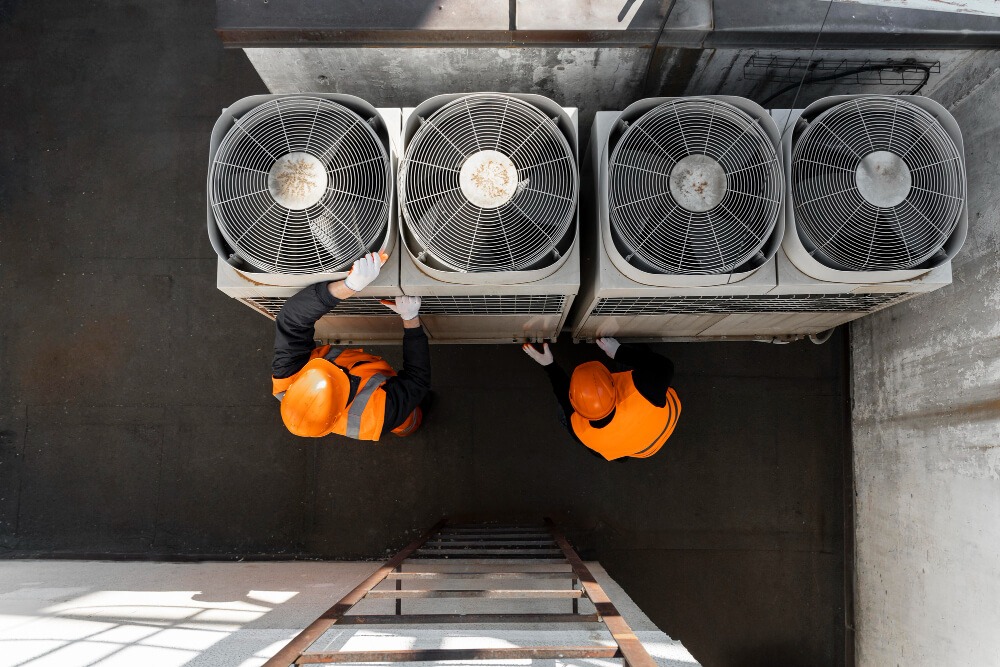
Behind the scenes of our modern, fast-paced global economy lies an incredibly complex network of thermal management and gas processing systems.
From the frozen aisles of your local supermarket to the massive energy extraction plants powering our cities, maintaining precise temperatures and managing volatile gases is a monumental task.
At the very heart of these critical operations are compressors, the relentless mechanical engines that drive industrial refrigeration, enable heavy-duty climate control, and ensure safe chemical handling. In this comprehensive guide, we will break down how advanced compression technology is fundamentally shaping major industries across the globe.
1. The Core of Industrial Refrigeration and Gas Processing
To truly understand modern supply chains, one must recognize the physics and engineering that keep them intact. Whether the goal is to cool a colossal warehouse or process raw natural gas, the underlying requirement is a mechanism to pressurize and move fluid or gas efficiently.
- The Basic Function: A compression system’s primary job is to take a low-pressure gas, reduce its volume to increase its pressure and temperature, and push it through a continuous cycle. In refrigeration, this allows the system to absorb heat from a specific environment and reject it elsewhere.
- The Operational Challenge: Traditional machines, such as reciprocating models, rely on pistons moving up and down. While functional, this constant start-and-stop motion generates immense friction, heat, and vibration, leading to frequent mechanical wear and mandatory downtime for repairs.
- The Modern Demand: Today’s global facilities operate 24 hours a day, 7 days a week. They demand machinery that can run continuously without catastrophic failure, leading engineers to seek out more reliable, rotary-based solutions.
2. The Engineering Marvel: Screw Compressors
The undeniable need for continuous, vibration-free operation sparked a major revolution in mechanical engineering, leading directly to the widespread adoption of screw compressors. These machines have completely redefined what facility managers expect regarding longevity and efficiency.
How Rotary Technology Works
Unlike the violent, vibrating action of a piston-based machine, this modern technology utilizes a highly sophisticated rotary mechanism. Inside a tightly sealed casing, two precisely machined helical rotors—a male and a female rotor—interlock perfectly.
- As the rotors spin continuously in opposite directions, gas is drawn into the expanding cavity at the intake end.
- As rotation continues, this cavity shrinks, smoothly and progressively compressing the gas along the length of the rotors until it reaches the discharge port.
Unmatched Mechanical Advantages
The benefits of this specific engineering design are profound for commercial and industrial applications:
- Minimal Vibration: Because the rotors move in a continuous, sweeping circular motion, there are no jarring directional changes, resulting in a remarkably smooth and quiet operation.
- Extended Lifespan: With significantly fewer moving parts—eliminating the need for vulnerable valves, connecting rods, or piston rings—the mechanical wear is drastically reduced.
- Continuous Operation: They are built to run endlessly, making them the ultimate choice for facilities that simply cannot afford an unexpected system shutdown.
3. Scaling Up: The Power of Industrial Screw Compressors
While standard rotary models are excellent for commercial HVAC and moderate cooling, heavy-duty global industries require machinery engineered on an entirely different scale. This is the exclusive domain of industrial screw compressors.
These formidable heavyweights are constructed with ruggedized materials and robust internal geometries, specifically designed to tackle extreme volumes, handle highly corrosive chemical environments, and endure staggering operational pressures. They serve as the beating heart of custom-built refrigeration packages, vapor recovery systems, and high-capacity heat pumps.
Key Sectors Relying on Heavy-Duty Compression
The integration of massive rotary machines has transformed several critical sectors of the global economy:
- Logistics and Marine Transport: Offshore fishing vessels and international cargo ships rely on these massive units to rapidly freeze catches at sea and maintain strict cold-chain integrity across oceans.
- Food and Beverage Processing: From maintaining precise temperature gradients in dairy facilities to freezing tons of poultry and cooling vast fermentation tanks in breweries, large-scale compression guarantees food safety and high-yield production.
- Oil, Gas, and Chemical Refining: In highly volatile upstream and downstream environments, these robust machines manage gas turbine boosters and safely compress aggressive hydrocarbon vapors without succumbing to internal corrosion.
- Leisure and Sports: Maintaining massive indoor ice rinks or specialized climate-controlled sports facilities requires extreme, reliable cooling power capable of adjusting to sudden load changes.
4. Future-Proofing: Sustainability and Predictive Maintenance
The future of thermal management is not just about raw mechanical power; it is heavily focused on environmental responsibility and digital intelligence. The industry is currently undergoing a massive paradigm shift.
The Green Energy Transition
As global environmental regulations tighten, industries are rapidly moving away from synthetic, ozone-depleting chemicals. Modern compression systems are now optimized to utilize natural refrigerants like Ammonia (NH3) and Carbon Dioxide (CO2). Furthermore, these machines are playing a vital role in renewable energy processing, such as in biogas packages where they safely capture, compress, and distribute methane generated from organic waste.
The Era of Smart Machinery
Physical maintenance is also evolving. The integration of predictive maintenance protocols is fundamentally changing facility management.
- Real-Time Monitoring: Digital sensors continuously track vibration signatures, oil temperatures, and pressure differentials.
- Data-Driven Decisions: Software algorithms analyze this data to predict mechanical wear before it causes a catastrophic failure.
- Reduced Costs: This proactive approach minimizes unplanned downtime, ensures the machinery is always operating at peak efficiency, and drastically lowers long-term operational costs.
Conclusion
While they usually remain hidden away in the noisy utility rooms of massive factories or deep within the engine compartments of cargo ships, compression systems are the undeniable, silent champions of our modern world. By continuously investing in durable, high-efficiency mechanical solutions—specifically advanced rotary and heavy-duty rotary technologies—today’s global industries are ensuring that our food remains fresh, our vital energy supply chains keep flowing, and our infrastructure is fully prepared for the challenges of tomorrow.

Dexter Harlow lives and breathes celebrity culture. From red carpet moments to the latest viral gossip, he brings Hollywood to your screen with flair and insider insight. Known for his sharp wit and captivating storytelling, Dexter keeps fans hooked, delivering the hottest entertainment news before anyone else.