

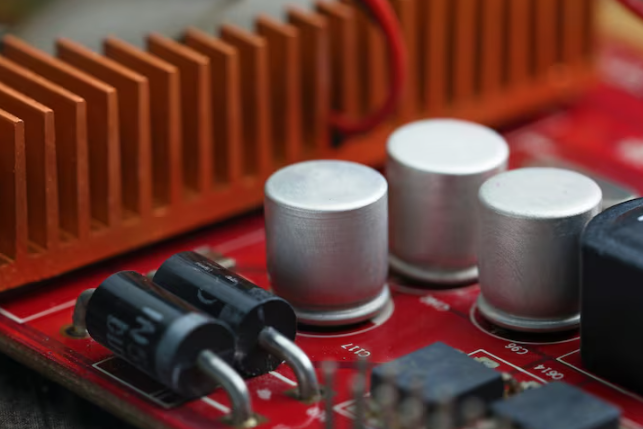
Reliable power management is essential in modern electronic equipment. From industrial automation systems and power supplies to renewable energy installations and communication infrastructure, electronic circuits depend on components that can stabilise voltage, filter electrical noise, and store energy when needed. Among the most commonly used passive components for these tasks are aluminium electrolytic capacitors, which offer high capacitance in a compact package.
An industrial electrolyic capacitor is widely used in applications that require energy storage, voltage smoothing, and ripple current filtering. These capacitors are designed to handle demanding operating conditions found in industrial equipment, where long service life, electrical reliability, and stable performance are important. Their ability to provide relatively high capacitance values compared with their physical size makes them a common choice for power conversion and filtering circuits.
How Aluminium Electrolytic Capacitors Work
Aluminium electrolytic capacitors consist of aluminium foil that has been chemically treated to create a thin oxide layer, which acts as the dielectric. An electrolyte serves as the second conductive element, allowing the capacitor to store and release electrical energy efficiently. This construction enables much higher capacitance than many other capacitor types of a similar size.
Because these capacitors are polarised, they must be connected with the correct polarity in DC circuits. Reversing the polarity or applying unsuitable operating conditions may damage the component or significantly reduce its lifespan. For this reason, proper circuit design and installation are essential for reliable operation.
Common Applications Across Industries
Industrial electrolytic capacitors are used in a wide range of electronic systems where stable power delivery is required. One of their primary functions is smoothing the output of rectified power supplies by reducing voltage ripple and helping maintain consistent DC voltage.
They are commonly found in:
- Switching power supplies
- DC-DC converters
- Variable frequency drives
- Industrial automation equipment
- Renewable energy inverters
- Telecommunications systems
- Motor control equipment
Their high capacitance also makes them suitable for temporary energy storage during sudden load changes, helping electronic systems maintain stable performance under varying operating conditions.
For engineers, maintenance professionals, and equipment designers evaluating passive electronic components, exploring a range of aluminium capacitors for industrial electronics can provide a better understanding of products available for different voltage ratings, capacitance values, and operating environments.
Factors to Consider When Selecting a Capacitor
Choosing the appropriate capacitor involves more than matching the required capacitance. Several electrical and environmental characteristics influence long-term reliability.
Important considerations include:
- Capacitance value
- Rated voltage
- Operating temperature
- Ripple current capability
- Equivalent Series Resistance (ESR)
- Expected service life
- Physical dimensions
For applications involving switching power supplies or high-frequency circuits, low-ESR capacitors are often preferred because they generate less heat and can handle higher ripple currents more effectively. Selecting components with appropriate temperature ratings also contributes to improved reliability in demanding industrial environments.
Maximising Service Life
Like many electronic components, electrolytic capacitors perform best when operated within their specified ratings. Excessive temperature is one of the primary factors that affects their lifespan, as prolonged exposure to heat can gradually dry out the electrolyte and alter electrical characteristics over time.
Good thermal management, proper ventilation, and adequate spacing between heat-generating components help extend capacitor life. Designers also commonly select capacitors with voltage ratings that provide an appropriate operating margin rather than running continuously at the maximum rated voltage.
Routine inspection during equipment maintenance can identify early signs of ageing, such as bulging, leakage, or changes in electrical performance, allowing components to be replaced before they affect system reliability.
Supporting Reliable Power Electronics
Power electronics continue to play an increasingly important role in industrial automation, renewable energy, transportation, and communication systems. As equipment becomes more efficient and compact, the demand for reliable energy storage and filtering components continues to grow.
Advances in capacitor technology have improved ripple current capability, operating life, and thermal performance, enabling modern electronic systems to operate more efficiently under demanding conditions. Selecting components that match the electrical and environmental requirements of the application remains an important part of achieving dependable long-term performance.
Whether used in power supplies, motor drives, or industrial control equipment, an industrial electrolyic capacitor provides reliable energy storage and voltage filtering that supports stable electronic operation. By helping smooth power delivery and reduce electrical noise, these capacitors remain an essential component in modern industrial electronics.

Dexter Harlow lives and breathes celebrity culture. From red carpet moments to the latest viral gossip, he brings Hollywood to your screen with flair and insider insight. Known for his sharp wit and captivating storytelling, Dexter keeps fans hooked, delivering the hottest entertainment news before anyone else.