

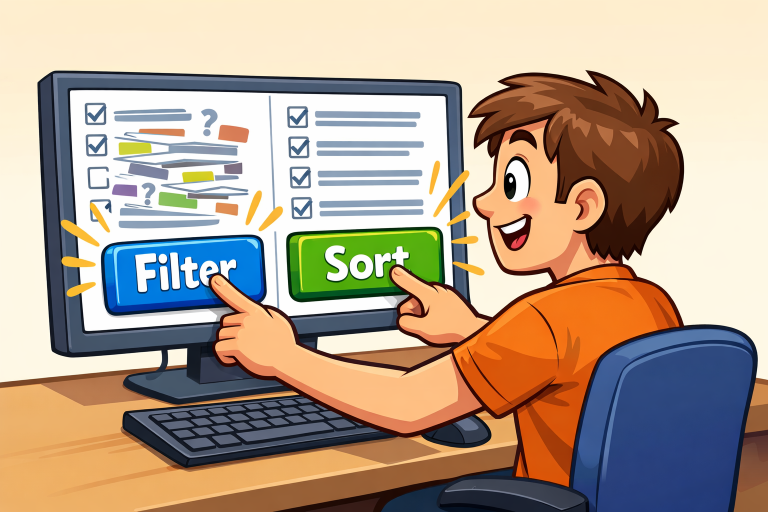
In today’s digital landscape, the sheer volume of information presented to users can be overwhelming. Filtering and sorting are not just design conveniences; they are essential tools that empower people to find what they need quickly and easily. By helping users streamline vast datasets, effective filtering and sorting can dramatically enhance satisfaction and engagement.
Understanding the principles of filtering and sorting enhances navigation and brand perception. When users easily find relevant criteria, interactions become satisfying and productive. Businesses and designers benefit from best practices in filter and sort UX, which streamline content discovery, reduce abandonment, and improve user retention and goal attainment. These mechanisms also foster engagement by saving time and reducing frustration, earning user trust and loyalty in competitive markets.
Understanding Filtering and Sorting
Filtering and sorting are core features in user experience (UX) design, especially when users interact with substantial datasets or comprehensive product catalogs. The distinctions between these functionalities are critical: filtering reduces results to display items that match specific criteria, while sorting arranges a dataset (such as by relevance, date, price, or popularity) without excluding any items. Both functionalities are crucial for organizing information in a manner that aligns with user intent.
Effective filtering helps users quickly hone in on their exact needs. Clear sorting enables users to scan and compare options in a logical order, which is especially important in e-commerce, news, and data-driven interfaces. Mastering these foundational tools supports a more satisfying, intuitive, and trustworthy browsing experience.
Best Practices for Filtering
Implementing effective filtering systems in user interfaces focuses on clarity and relevance. Filters must be easily located and understandable, with clear labeling and logical placement to enhance user awareness. Categories should be curated based on actual user needs to prevent confusion from irrelevant or excessive options. The inclusion of a single-click “Clear All” functionality is essential, allowing users to reset filters effortlessly and explore new options. When done correctly, filtering minimizes frustration and cognitive load, fostering a smoother, more predictable user experience that empowers users in their searches or browsing activities.
Best Practices for Sorting
Default sorting should prioritize the most common intent, typically relevance or popularity, to streamline the user experience. Providing multiple sorting options, such as date, price, or rating, enhances flexibility to meet diverse user needs. Moreover, maintaining a consistent interface for sorting controls, placed in familiar locations like above product grids, is crucial for usability. Employing well-considered sorting strategies not only speeds up information retrieval but also enhances users’ decision-making, resulting in greater satisfaction and trust in the service.
Integrating Filtering and Sorting
Seamless integration of filtering and sorting amplifies the effectiveness of both features. A unified “Sort & Filter” panel, for example, lets users quickly combine criteria and organize results in a single location. Nevertheless, design clarity is paramount. Too many options in a crowded space risk confusion and abandonment.
User testing can reveal which integration methods work best for specific audiences and datasets. Iterate and refine your designs based on real usage data to achieve the right balance between power and simplicity.
Case Study: AI-Powered Filters
The integration of artificial intelligence (AI) into filtering can lead to dramatic improvements in user experiences. As highlighted in a notable case from an apparel rental platform, leveraging AI for garment categorization increased filter adoption by 84%. The platform used machine learning to tag items by occasion, style, and weather compatibility, giving users smarter and more relevant filter choices.
Personalized AI-driven filtering not only simplifies choices but also supports discovery and inspiration. Ultimately, AI can help deliver a more customized and productive navigation process for every user segment.
Conclusion
Thoughtfully designed filtering and sorting systems are vital for modern digital interfaces. By focusing on user needs, applying industry best practices, and exploring innovations like AI, teams can create more usable, efficient, and satisfying products. Regular testing and refinement are crucial to maintaining effectiveness as user expectations and content evolve. Companies that prioritize these features establish stronger relationships and drive higher engagement over time.

Dexter Harlow lives and breathes celebrity culture. From red carpet moments to the latest viral gossip, he brings Hollywood to your screen with flair and insider insight. Known for his sharp wit and captivating storytelling, Dexter keeps fans hooked, delivering the hottest entertainment news before anyone else.