

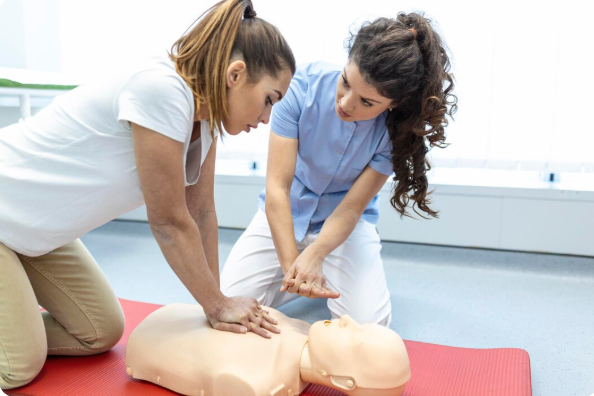
Workplace emergencies happen without warning, and immediate bystander response is often the only way to prevent a tragedy. This guide breaks down why practical CPR skills matter, how blended learning fits easily into busy schedules, and what you actually practice during a certified first aid course.
You go to work every single day expecting things to run smoothly. We all do. But what happens if a coworker suddenly collapses in the breakroom or a customer starts choking? It is a terrifying thought that most of us push out of our minds.
When a medical emergency strikes, relying entirely on a 911 dispatcher is a risky gamble. That is exactly why enrolling in certified CPR training Saskatchewan is so incredibly important for your staff. You don’t just learn textbook theory. You gain the physical confidence to step in and keep blood pumping until the paramedics finally arrive.
Why Are Fast Response Times So Crucial?
When a person’s heart stops beating, their brain loses its oxygen supply instantly. Permanent brain damage can start in just three to four minutes. Depending on traffic and weather, an ambulance might take ten or fifteen minutes to reach your office building.
By starting chest compressions right away, you physically act as the person’s heart. You are literally pushing oxygen up to their brain. That immediate, confident action can easily double or triple their chances of surviving the ordeal.
What Will You Actually Practice in Class?
Modern safety classes skip the heavy, complicated medical jargon. Instructors know you are not trying to become a doctor. Instead, the focus is entirely on physical repetition and building muscle memory.
You will practice delivering chest compressions on a specialized dummy until the rhythm feels totally natural. You will also get your hands on an Automated External Defibrillator (AED). These smart devices talk out loud and guide you through every step, and practicing with one removes the fear of using it in real life.
How Does Blended Learning Work for Busy Schedules?
Nobody wants to sit in a stuffy classroom for two full days. We know that pulling your team off the floor hurts productivity. That is why blended learning has become the standard for modern businesses.
Your employees can finish the theory reading online from their own homes or during quiet shifts. After that, they just attend a quick, hands-on session with an instructor to prove they can do the physical skills. It saves everyone hours of time while still meeting all provincial OHS workplace requirements.
If you are looking for first aid training near Downtown Regina, Albert Street, or other areas close to our facility, then you may reach out to Coast2Coast First Aid & Aquatics in that area. For more info and articles like this visit: c2cfirstaidaquatics.com.
What Are the Most Frequently Asked Questions About Workplace First Aid?
1. Can I get in legal trouble for doing CPR wrong at work? Good Samaritan laws generally protect individuals who step up to help during an emergency, as long as they act reasonably and within the scope of their basic training. Your certification gives you the foundation to act safely.
2. Are online-only first aid certificates valid for my job? Usually, no. Most provincial safety and workplace boards require you to complete an in-person physical skills assessment. An online-only course does not prove you can actually perform chest compressions correctly.
3. Will I break someone’s ribs during CPR? You might hear a pop or crack, which is incredibly scary, but it is actually quite common. A broken rib heals. If their heart has stopped, you cannot make them any worse, so keep pushing.
4. How long does a standard certification stay valid? A typical first aid and CPR certification is valid for three years. However, taking a short refresher course annually is highly recommended because physical muscle memory fades very quickly.
5. Do I have to do mouth-to-mouth on a coworker? No. If you do not have a sterile barrier mask or feel uncomfortable giving rescue breaths, hands-only CPR (continuous chest compressions) is still highly effective for teens and adults.

Dexter Harlow lives and breathes celebrity culture. From red carpet moments to the latest viral gossip, he brings Hollywood to your screen with flair and insider insight. Known for his sharp wit and captivating storytelling, Dexter keeps fans hooked, delivering the hottest entertainment news before anyone else.