

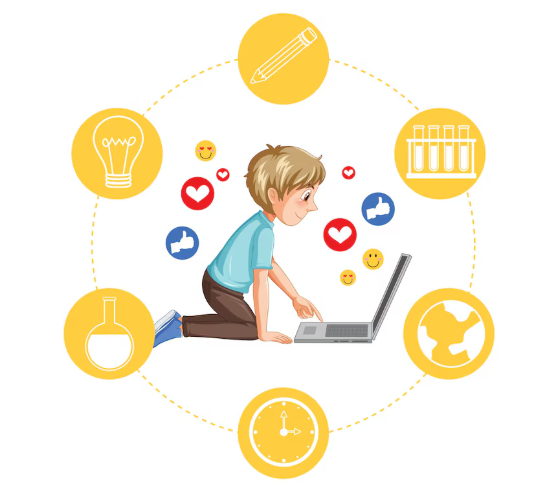
You pick up your phone to check the time. Forty-seven minutes later, you are watching a video of a raccoon riding a Roomba, you have angrily commented on a stranger’s political post, and you have no idea what time it is.
You were supposed to be working, sleeping, or talking to a human who actually lives in your house.
Sound familiar?
Social media is not evil. It connects us to distant friends, builds communities, and makes us laugh. But it is also designed to be addictive—literally. The same brain chemistry that made slot machines profitable makes infinite scrolling profitable.
The average person spends 2 hours and 24 minutes per day on social media. That is 35 full days per year. Over a lifetime, that is nearly 6 years of staring at a screen, scrolling past ads and arguments and other people’s highlight reels.
But here is the good news: Small reductions in social media time produce massive improvements in mental health, productivity, relationships, and sleep.
By the end of this article, you will understand exactly what social media is doing to your brain, what happens when you cut back, and a simple step-by-step plan to reclaim your time and attention.
The Honest Truth: Social Media Is Designed to Hijack Your Brain
You are not weak-willed. You are not lazy. You are up against a $200 billion industry that employs the world’s best neuroscientists, engineers, and behavioral psychologists to keep you scrolling.
Here is how they do it:
- Variable rewards: Every time you pull down to refresh, you might see a like, a funny video, a nasty comment, or nothing interesting. This unpredictability is exactly how slot machines keep gamblers pulling the lever.
- Infinite scroll: There is no natural ending point. A magazine ends. A TV episode ends. But Instagram, TikTok, and Facebook never end. So you never stop.
- Social validation loops: Likes, comments, and shares trigger dopamine (the same chemical released by cocaine and sugar). You learn to crave that notification badge.
- Fear of missing out (FOMO): If you are not on the app, everyone else is having fun, getting ahead, or seeing something you are missing. This is manufactured anxiety.
This is not a conspiracy theory. Former tech executives (including the inventor of the “like” button and the creator of the infinite scroll) have publicly apologized and testified before Congress that they designed these products to be addictive.
You are not broken. The system is.
And the only way to win is to stop playing by their rules.
The Hidden Costs of Daily Social Media Use
Before we talk about the benefits of quitting or cutting back, let’s be honest about what social media is costing you right now.
The Time Cost (The Most Obvious)
2.5 hours per day = 17.5 hours per week = 70 hours per month = 840 hours per year.
What could you do with 840 hours?
- Learn a new language (fluent in 6 months)
- Write a book (NaNoWriMo is 50 hours)
- Get in the best shape of your life (30 mins walking daily = 182 hours)
- Start a side business (most launch in under 500 hours)
- Read 50 books (average book takes 6–8 hours)
- Spend 10 full weeks of quality time with your kids or partner
You are not “too busy.” You are spending your free time on an app that profits from your attention.
The Mental Health Cost
The research is now overwhelming:
- Depression: A 2018 study of 5,000 young adults found that those who used social media more than 2 hours per day were twice as likely to report depression than those who used it under 30 minutes.
- Anxiety: The constant comparison to others’ highlight reels (vacations, promotions, perfect bodies) creates social anxiety and inadequacy. One study found that 60% of people feel inadequate after scrolling Instagram.
- Loneliness: Paradoxically, more social media use is correlated with higher loneliness. Passive scrolling (watching others) does not replace real connection.
- Self-esteem: Especially for teenage girls (but also for adults), social media use correlates directly with lower self-esteem, higher rates of eating disorders, and body dysmorphia.
The Attention and Productivity Cost
Every time you check your phone, you create an “attention residue.” Your brain takes 5–15 minutes to fully re-focus on your original task after a distraction.
If you check social media 10 times per day (conservative), you lose 1–2.5 hours of focused productivity. Not from the scrolling time, but from the recovery time.
This is why you feel exhausted at the end of the workday despite feeling like you did nothing. Your brain has been constantly switching contexts.
The Sleep Cost
The blue light from your phone suppresses melatonin (the sleep hormone). But worse: the content (exciting, stressful, or enraging) keeps your brain activated.
People who use social media within 60 minutes of bedtime:
- Take 30–60 minutes longer to fall asleep
- Get 30–50 minutes less REM sleep (crucial for memory and emotional regulation)
- Report significantly lower sleep quality
Over months and years, chronic poor sleep contributes to every major disease: obesity, diabetes, heart disease, dementia, depression.
The Relationship Cost
The average parent spends 3–5 hours per day on their phone. The average toddler receives 4 minutes of undivided attention per day from that same parent.
Couples who report high social media use have:
- 30% lower relationship satisfaction
- Higher rates of conflict (“you’re always on your phone”)
- Lower perceived emotional support from their partner
You are not scrolling during “empty time.” You are scrolling during time that could be used to connect with the people right in front of you.
10 Science-Backed Benefits of Limiting Social Media Time
When people reduce social media use (even by small amounts), these benefits appear consistently.
1. Reduced Anxiety and Depression Symptoms
The landmark study: A 2018 study at the University of Pennsylvania had 143 undergraduates limit Facebook, Instagram, and Snapchat to 10 minutes per platform per day (30 minutes total). After 3 weeks, the limiting group showed significant reductions in depression and loneliness compared to the control group who used social media normally. The heaviest users showed the biggest improvements.
Why it works: Social media constantly triggers social comparison. “Why is everyone else on vacation and I am at my desk?” Limiting exposure stops the comparison loop.
Expected result: Within 7–14 days of cutting social media to 30–60 minutes per day, most people report feeling noticeably less anxious and less depressed.
2. Improved Sleep Quality and Duration
The study: A 2020 study of 1,000 adults found that reducing social media use by 30 minutes before bed improved sleep quality scores by 40% within one week.
Real-world result: People who stop scrolling 60–90 minutes before bed fall asleep 20–30 minutes faster and wake up feeling more rested.
Why it works: No blue light + no emotionally activating content + no endless stimulation = your brain can actually power down.
3. Reclaimed Hours (The Most Immediate Benefit)
This one is simple math.
If you currently spend 2 hours per day on social media and cut to 30 minutes, you save 1.5 hours per day.
That is 10.5 hours per week.
That is 45 hours per month.
That is 540 hours per year.
That is 22 full days of your life back every single year.
What will you do with 22 extra days?
4. Improved Focus and Deep Work Ability
Your brain has an attentional “muscle.” Constant social media checking (10–20 times per day) keeps that muscle weak and twitchy.
The recovery timeline: After 2–3 weeks of reduced social media, most people report:
- Ability to read a book for 30+ minutes without checking their phone
- Completing work tasks without context-switching
- Less “brain fog” in the afternoon
- Higher quality creative work
The mechanism: Your attention span rebuilds. You stop needing constant novelty and stimulation. Boredom becomes tolerable again (and boredom is where creativity lives).
5. Deeper Real-Life Relationships
The counterintuitive truth: More social media “friends” = fewer real friends. The average person has 338 Facebook friends but only 3–5 close confidants. That number has been dropping for 30 years.
When you limit social media:
- You call or text actual people instead of passively liking their posts
- You show up more present (phone in pocket, not in hand)
- You have more to talk about because you did not already see their vacation photos
- You invest time in shared activities instead of separate scrolling
The result: People who cut social media report feeling less lonely, not more. Virtual connection is a poor substitute for real connection.
6. Higher Self-Esteem and Reduced Comparison
Social media is a highlight reel of other people’s lives compared to the behind-the-scenes of your own.
You see their promotion, not their panic attacks. Their vacation, not their credit card debt. Their wedding, not their arguments.
When you stop looking at everyone else’s carefully curated best moments, you stop feeling inadequate about your own normal, messy, beautiful life.
The study: A 2017 study found that just 30 minutes of Facebook browsing caused measurable drops in self-esteem. The effect was largest when participants looked at profiles of people they perceived as “better” than themselves (which is most profiles, because people post selectively).
The fix: Limit exposure. The less you compare, the better you feel.
7. Reduced FOMO (Fear of Missing Out)
Paradoxically, the more you use social media, the worse FOMO gets.
Why: Social media shows you everything you are missing. Live updates from parties you were not invited to. Friends hanging out without you. Sales you did not know about. News you did not hear.
The cure: Quit or cut back. After 2–3 weeks, FOMO drops dramatically because you stop knowing what you are missing. And here is the secret: You were not missing anything important. Most of it was noise.
People who limit social media report that they still hear about truly important events (engagements, births, major milestones) from real conversations. The rest does not matter.
8. Better Mood and Less Irritability
Notice how you feel after 30 minutes of scrolling. For most people, the answer is: tired, irritable, vaguely dissatisfied, and somehow both overstimulated and bored.
Now notice how you feel after 30 minutes of reading, walking, cooking, calling a friend, or even just sitting quietly.
Social media is emotionally exhausting. You are processing dozens of updates, opinions, advertisements, and emotional posts from hundreds of people. Your brain was not designed for this.
Cutting back produces a calmer, more stable mood within 3–5 days.
9. Increased Ability to Tolerate Boredom
Boredom has become terrifying. The average person reaches for their phone within 15 seconds of waiting in line or sitting alone.
But boredom is not the enemy. Boredom is where creativity comes from. When you are bored, your brain enters “default mode network”—the state where you daydream, solve problems, generate ideas, and process emotions.
By constantly escaping boredom with social media, you are blocking creativity and emotional processing.
When you limit social media, you will be bored more often. At first, it is uncomfortable. Then you start thinking. Then you start creating. Then you start living.
10. A Sense of Control Over Your Own Attention
This is the meta-benefit. The one that underlies all the others.
Social media companies have trained you to respond to notifications like a Pavlovian dog. They decide what you see, when you see it, and how you feel about it. You are a passenger in your own attention.
Limiting social media is an act of reclamation. You decide where your attention goes. You decide what matters. You stop being a product (your attention sold to advertisers) and start being a person again.
That feeling—agency, autonomy, control—is more valuable than any like or share.
Real-Life Results: What Happens When People Quit (or Cut Back)
Emma, 24, college student:
- Before: 5+ hours daily on TikTok and Instagram. Could not study for more than 10 minutes without checking phone. Frequent anxiety and poor sleep.
- After 30-day limit (30 min/day): GPA improved from 3.0 to 3.7. Anxiety dropped significantly. Sleeps 7.5 hours per night.
- Quote: “I didn’t realize how much brain space social media was taking up until I stopped.”
James, 41, father of two:
- Before: 2 hours nightly on Twitter and Reddit after kids went to bed. Felt disconnected from wife. Snappy with kids.
- After cutting to 30 min/day (plus no phones after 8 PM): Marriage improved dramatically. More patient with kids. Started woodworking hobby.
- Quote: “My kids noticed before I did. My daughter said, ‘Daddy looks at us now.’ That wrecked me.”
Priya, 35, marketing manager:
- Before: Constantly checking LinkedIn and Instagram for “professional inspiration.” Felt behind peers. Worked 50+ hours but felt unproductive.
- After deleting apps from phone (checks once daily on laptop): Completed a professional certification in 3 months. Promoted. Less stressed.
- Quote: “I was confusing activity with productivity. Scrolling felt like work. It was not.”
Carlos, 19, competitive gamer:
- Before: Twitter and Discord open constantly. Could not focus on gameplay or school. Anxious about “missing memes” and drama.
- After using app blockers (45 min daily limit): Climbed 500 rank points in his game. Grades improved. Anxiety under control.
- Quote: “My reaction time literally improved because I stopped splitting my attention.”
How to Limit Social Media Time: A Step-by-Step Plan
Do not try to quit cold turkey if you currently use 3+ hours daily. That sets you up for failure. Use the 30-day taper method.
Week 1: Awareness and Audit (No Changes Yet)
Do this: Install an app tracker (iOS Screen Time, Android Digital Wellbeing, or a free app like RescueTime).
Track for 7 days. Do not change your behavior. Just observe.
At the end of the week, answer:
- How many hours per day average?
- Which apps consume the most time?
- At what times of day do you scroll most? (Morning? Work lulls? Bedtime?)
- How do you feel after scrolling? (Be honest.)
Why this works: You cannot change what you do not measure. Most people are shocked by their actual numbers. (“I thought I used 1 hour. It is 4 hours.”)
Week 2: Remove Notifications (Low Hanging Fruit)
Do this: Go into your phone settings. Turn off all social media notifications. Not “banners only.” Not “badges.” Off. Completely.
Also: Delete social media apps from your home screen. Move them to a folder on the second or third screen, or search to open them.
Why this works: Notifications are designed to hijack your attention. Without them, you check on your terms, not the app’s terms. Most people find they check 50–70% less just by removing notifications.
Week 3: Time Limits (The Core Intervention)
Do this: Set app timers.
- iOS Screen Time: Settings > Screen Time > App Limits > Add Limit (set to 30–45 minutes total per day for social media apps).
- Android Digital Wellbeing: Settings > Digital Wellbeing > Dashboard > Tap the hourglass icon next to each app.
- Alternative: Use the Freedom app or Cold Turkey (computer) to block apps during work hours.
Set a realistic limit: If you currently use 3 hours, do not set 30 minutes. You will fail. Set 90 minutes for week 3, 60 minutes for week 4, 30–45 minutes for week 5.
When the timer blocks you: Stop. Close the app. Do something else. The first few days will be uncomfortable. That discomfort is withdrawal. It passes.
Week 4: Schedule Your Scrolling (From Reactive to Intentional)
Do this: Instead of checking social media whenever you are bored, schedule two or three specific blocks per day.
- Example: 10 minutes at 12:00 PM (lunch). 10 minutes at 5:00 PM (work end). 10 minutes at 8:00 PM (after dinner).
- Outside those blocks, do not open the apps.
- Use an app blocker to enforce the schedule.
Why this works: Scheduled use removes the random, endless checks. You still get the connection and entertainment, but you control when.
Week 5: Phone-Free Zones
Do this: Create two phone-free zones in your life.
- Zone 1: Bedroom. Phone charges outside the bedroom (kitchen or living room). Use a real alarm clock. No phone for 60 minutes before bed.
- Zone 2: Meals. No phones at the table. Not even face down. In a pocket or another room.
After one week of phone-free meals: Notice how much more you talk to the people you are eating with. Notice how much more you taste your food.
Week 6-8: The 30-Day Social Media Fast (Optional)
For those who want a reset: Delete social media apps completely for 30 days. Not deactivate accounts (unless you want to). Just delete the apps.
What to expect:
- Days 1–3: Withdrawal. You will reach for your phone constantly. You will feel anxious and bored.
- Days 4–10: You will find other things to do. Reading, walking, cleaning, calling people.
- Days 11–20: You will stop thinking about it. Life feels slower, calmer.
- Days 21–30: You will genuinely not miss it. You will realize how much of your mental energy was consumed by nothing.
After 30 days: Reinstall only the apps that genuinely add value. Set strict limits. Keep the phone-free zones.
Tools to Help You Limit Social Media
| Tool | What It Does | Cost | Best For |
|---|---|---|---|
| iOS Screen Time | Built-in iPhone app limits, downtime | Free | iPhone users |
| Android Digital Wellbeing | Built-in Android app timers, wind-down mode | Free | Android users |
| Freedom | Blocks apps and websites across all devices (phone, tablet, computer) | $9/month or $100 lifetime | People who need serious blocking |
| Opal | Beautiful interface, group challenges, deep blocking | Free tier; $6–$12/month | Aesthetic, gamified blocking |
| One Sec | Forces a 10-second pause before opening any chosen app | Free tier; $4/month | People who want to “notice the urge” |
| AppBlock (Android) | Very powerful, schedule-based blocking | Free tier; $5/year | Android power users |
| Offtime | Blocks apps and tracks usage | Free | General tracking + blocking |
Start free: Use Screen Time or Digital Wellbeing. That is powerful enough for most people.
What to Do With Your Reclaimed Time (The Replacement Principle)
You cannot just “stop scrolling.” You will be bored, and boredom will drive you back. You must replace social media with better alternatives.
The replacement menu (pick 2–3):
For 5–15 minutes:
- Read 5–10 pages of a book
- Do 10 stretches or pushups
- Text or call one friend or family member
- Make a cup of tea and drink it without screens
- Tidy one small area (desk, counter, nightstand)
- Step outside and breathe for 5 minutes
- Listen to one song all the way through (no multitasking)
For 15–30 minutes:
- Go for a walk (around the block, listening to nothing)
- Cook a real meal (not microwaved)
- Work on a hobby (draw, play instrument, garden, woodwork)
- Journal (three things you are grateful for, three things bothering you)
- Take a nap
- Volunteer (even online—transcribing, tutoring, mentoring)
- Call a long-distance friend or relative
For 30–60 minutes:
- Read a book (you will finish 1–2 books per month this way)
- Exercise (walk, run, yoga, strength training)
- Learn something (Duolingo, YouTube tutorial, online course)
- Deep clean one room
- Work on a side project or business idea
- Have an actual conversation with someone in your home
The key: Keep a “replacement list” on your phone’s home screen. When you feel the urge to open Instagram, look at the list and pick one replacement. After 2 weeks, the replacement becomes the habit.
Common Fears About Limiting Social Media (Debunked)
“I will miss important news or events.”
Truth: You will not. Important news finds you (friends text, family calls, news alerts). The other 99% of content is noise. After 30 days of low social media, you will realize how little of it actually matters.
“My friends will forget about me.”
Truth: Real friends will text or call. Everyone else was not a real friend. If the only place you exist is in their feed, you do not exist in their life. Invest in the 3–5 people who actually show up.
“I will fall behind in my industry.”
Truth: Professional social media (LinkedIn, Twitter) can be valuable, but 15 minutes of focused use is as good as 2 hours of distracted use. Schedule professional use as a block. Do not scroll.
“I will be bored.”
Yes. That is the point. Boredom is the gateway to creativity, reflection, and real life. Welcome boredom. It has been waiting for you.
“I have tried before and failed.”
Truth: Most people fail because they set unrealistic goals (cold turkey from 5 hours to zero) or do not have replacements. Taper slowly. Build replacements. Try again. Failure is data, not destiny.
What About Business or Work Use?
Many people legitimately need social media for work (marketing, community management, networking).
The rule for work use: Create separation.
- Use a different browser profile or different device for work social media.
- Schedule work social media into blocks (9 AM for 30 minutes, 1 PM for 30 minutes).
- Do not keep work social media apps on your personal phone.
- At 5 PM, close the browser tab. Work social media ends.
If you use social media for work, track personal use separately. Most people find that “work use” is 80% work and 20% scrolling. Be honest with yourself.
The 30-Day Challenge: A Complete Plan
Day 1: Track your usage. Do not change anything.
Day 2: Turn off all notifications.
Day 3: Delete social media apps from your home screen.
Day 4: Create your replacement list (5–10 activities).
Day 5: Set a timer for 30 minutes less than your average.
Day 6: One phone-free meal (no devices at table).
Day 7: Review your week. Note how you feel.
Day 8-14: Reduce social media by another 15–30 minutes. Add one phone-free hour before bed.
Day 15-21: Schedule two specific scrolling blocks per day. No other checks.
Day 22-28: Add a phone-free morning (no phone for first 60 minutes awake).
Day 29-30: Go a full 48 hours with zero social media. Survive the discomfort.
Day 31: Decide your permanent rules (e.g., 30 minutes daily, no phone at meals, no phone in bedroom, 2 scheduled blocks).
Final Thoughts: You Are Not Missing Anything
The social media companies will tell you that you need their products to stay connected, informed, and relevant.
They are lying.
You need real connection, not infinite scrolling. You need quality information, not outrage-bait headlines. You need your own life, not the highlight reels of strangers.
The greatest benefit of limiting social media is not what you gain (though you gain a lot). It is what you stop losing: your attention. Your peace. Your time. Your relationships. Your sleep. Your sense of self.
Every minute you do not spend on social media is a minute you can spend doing something that actually matters to you.
Not to an algorithm. To you.
Start today. Do not delete your accounts forever (unless you want to). Just turn off notifications. Just track your time. Just replace one scrolling session with a walk or a call or a book.
Small changes compound. In 30 days, you will not believe you ever lived differently.
Your real life is waiting. It has been waiting the whole time.
Your 7-Day Action Plan
- Day 1: Install Screen Time or Digital Wellbeing. Track your usage for 24 hours. Do not judge. Just observe.
- Day 2: Turn off all social media notifications. Every single one.
- Day 3: Move social media apps off your home screen. Hide them in a folder or search only.
- Day 4: Create your replacement list. Write down 10 things you can do instead of scrolling. Put it in your notes app.
- Day 5: Set your first app time limit. Start with 30 minutes less than your average.
- Day 6: Have one phone-free meal today. No phone at the table.
- Day 7: Charge your phone outside your bedroom tonight. Use a real alarm clock.
Bonus: Tell one friend you are doing this challenge. Ask them to check in with you in 7 days.
Your attention is your most valuable resource. Protect it like your life depends on it—because your quality of life absolutely does.
Want more practical guides to reclaiming your time and attention? Share this article with someone who is always on their phone.

Dexter Harlow lives and breathes celebrity culture. From red carpet moments to the latest viral gossip, he brings Hollywood to your screen with flair and insider insight. Known for his sharp wit and captivating storytelling, Dexter keeps fans hooked, delivering the hottest entertainment news before anyone else.