

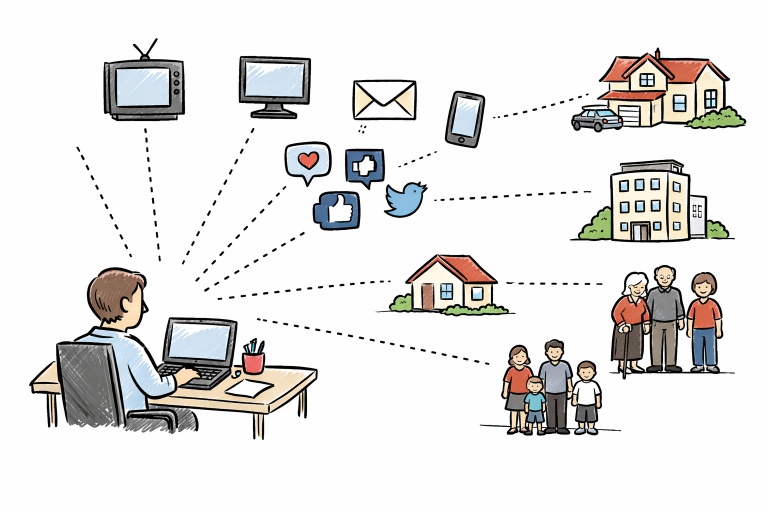
In today’s evolving digital ecosystem, advertisers are searching for more advanced ways to connect with consumers in personalized, meaningful ways. Through addressable solutions, marketers can now target specific households or individuals across a range of devices and platforms, delivering messages that are highly relevant to each recipient. This precision not only enhances engagement but also drives stronger results for brands seeking to optimize their media spend.
Addressable advertising enables advertisers to move away from broad, one-size-fits-all campaigns and instead tailor messaging based on real audience data. The result is a more cohesive, impactful strategy that adapts to consumers’ preferences and life stages, boosting conversion and loyalty.
The expansion of addressable channels across digital, television, and physical mediums offers marketers multiple paths to reach audiences. As data continues to fuel these strategies, understanding the key channels available, their distinct advantages, and important deployment guidelines is crucial for marketing leaders.
This guide explores the core addressable channels every marketer should understand and utilize to achieve greater clarity, control, and results from their campaigns.
Addressable TV
Addressable TV revolutionizes traditional television advertising by allowing marketers to serve different ads to different households even while they’re watching the same program. Advertisers leverage household-level audience data for improved targeting accuracy. With adoption now mainstream among marketers, addressable TV continues to grow in both reach and sophistication. According to a study by Go Addressable, 73% of marketers currently use this method, underscoring its significance in television ad strategies.
Brands looking to expand their television campaigns are now integrating addressable TV as a cornerstone of their omnichannel marketing. This integration is enabling campaigns with unified messaging and frequency management, delivering consistent experiences across traditional and streaming TV audiences. As technology providers and distribution partners enhance measurement and attribution capabilities, campaign reporting is becoming more granular. Marketers can now track outcomes such as website visits, purchase behavior, or app downloads at the household level, providing valuable insights into campaign effectiveness and ROI attribution.
Connected TV (CTV)
Connected TVs enable consumers to stream content using internet-powered smart TVs and streaming devices. With CTV, marketers can tap into powerful data signals and behavioral cues to deliver addressable ads that are targeted to viewer profiles and viewing habits. Recent collaborations, such as the expanded partnership between LiveRamp and FreeWheel, are increasing CTV advertising inventory and making it easier for brands to access and use addressable campaigns in this rapidly growing channel.
As the CTV landscape expands, so does the opportunity for brands to conduct creative testing and optimize their ad creative in near real-time. Many platforms now support advanced video formats, such as interactive and shoppable ads, that encourage active viewer engagement. Advertisers are also taking advantage of sequential messaging strategies, delivering tailored messages based on prior exposures across devices, to build stronger brand stories. The audience insights from CTV campaigns can inform and refine strategies across other channels, leading to more integrated cross-media experiences.
Digital Display and Video
Programmatic technologies have driven the evolution of addressable advertising in digital display and video formats. By harnessing audience data, advertisers can reach people based on web behavior, browsing habits, interests, and demographics. Demand-side platforms (DSPs) and data management platforms (DMPs) work together to help marketers buy and target placements programmatically in real time—optimizing campaigns dynamically. These targeted options are particularly effective for brands seeking to deliver scalable, yet personalized, messages and measurable outcomes.
Marketers are leveraging capabilities like dynamic creative optimization and retargeting to customize ads for users who have shown intent or engaged with previous campaigns. In the digital display space, the ability to blend first-party and third-party data empowers brands to control ad frequency, suppress irrelevant messaging, and ensure that users see offers or content that resonate with their interests. This approach not only increases conversion rates but also enhances the efficiency of media investment across various digital touchpoints.
Direct Mail
Direct mail’s relevance has been revitalized by a shift toward data-driven targeting. Marketers can leverage CRM data, behavioral insights, or demographic data to craft highly tailored messages and offers for each household, making print mailers far more engaging and likely to prompt a response than generic approaches. Advances in variable data printing and analytics are also helping brands better track responses and analyze the return on their direct mail investments, so even traditional print now delivers measurable ROI.
The modern integration of direct mail with digital campaigns closes the loop between physical and virtual experiences. By syncing direct mail drops with email or digital campaigns, marketers can drive stronger brand recall and reinforce conversions. New innovations like QR codes, personalized URLs, and augmented reality features are breathing interactivity into print, allowing consumers to quickly transition from offline to online and enabling sophisticated attribution and engagement measurement.
Email Marketing
Email marketing is a foundational addressable channel that enables brands to segment and personalize communications with users based on preferences, purchasing history, or previous engagement. Tactics such as triggered messaging, automated journeys, and dynamic content enable granular relevance, boosting open rates and conversions. Automation platforms help marketers manage segmentation, track results, and optimize communications for impact. The rise of privacy changes also means marketers must rigorously manage consent and data collection, ensuring campaigns remain highly targeted but also compliant with regulations.
Furthermore, integrating advanced analytics with email platforms enables robust A/B testing of subject lines, copy, and creative assets. Lifecycle email marketing, delivering messages triggered by events such as onboarding, renewals, or milestones, can drive long-term engagement and higher customer lifetime value. Marketers are encouraged to incorporate personalization techniques, such as smart recommendations or behavior-based content, to deepen customer relationships and increase the return from every campaign touchpoint.
Mobile Advertising
As smartphone adoption increases, addressable methods in mobile advertising are becoming more sophisticated. Location data, app interactions, device types, and mobile-browsing patterns all feed into targeting algorithms to deliver messaging at moments of greatest relevance. Formats like in-app ads, native content, SMS, and push notifications can be personalized to drive engagement. Brands need to respect user privacy by adhering to consent requirements and mobile advertising guidelines, but the possibilities for precise targeting and retargeting make mobile increasingly fundamental to omnichannel strategies.
Mobile advertising campaigns benefit from real-time responsiveness, enabling marketers to quickly adjust budgets, creative, or audience definitions to maximize impact. The integration of mobile and location data also helps brands drive online-to-offline results such as store visits or local event attendance—bridging the gap between digital interactions and real-world outcomes. As wearable devices and mobile-connected environments proliferate, the scope for addressable mobile advertising continues to expand, providing brands with even more avenues for engagement and interaction.
Social Media
Social media offers highly refined addressable advertising opportunities through robust targeting based on profiles, interests, activity, and interactions. Platforms like Facebook, Instagram, LinkedIn, and TikTok enable marketers to build and test custom and lookalike audiences, run retargeting campaigns, and track conversions in detail. The integration of social insights with first-party customer data further enhances addressability, enabling marketers to maintain brand consistency and relevancy across touchpoints while growing community engagement.
In addition, social platforms provide unique data sources and creative formats, such as Stories, Reels, and live video, that invite participation and foster brand loyalty. Brands frequently collaborate with influencers for enhanced trust and reach, ensuring messages are contextually relevant. Marketers can also leverage social commerce tools to offer shoppable posts and seamless purchase journeys, driving conversion rates while collecting richer audience insights that feed back into ongoing addressable marketing strategies.
Conclusion
Addressable advertising empowers marketers to craft and deliver highly relevant, timely messages across a diverse set of media channels. With improvements in data collection, integration, and analytics, each channel, whether digital, television, print, or mobile, offers unique opportunities for precision targeting and measurable impact. Staying informed and agile in this space is vital as technology and consumer habits continue to evolve. Marketers who embrace the full spectrum of addressable options and focus on privacy and value exchange will maximize engagement, ROI, and long-term brand growth.
Ultimately, the most successful marketing organizations will be those that embrace omni-channel addressable advertising as a dynamic, always-on discipline. By continually adopting new technologies, prioritizing privacy and personalization, and evolving their creative approaches, brands can create deeper, more durable customer relationships. The future of marketing lies in the ongoing fusion of data, technology, and human insight to deliver messages to the right person, in the right channel, at the right moment.

Dexter Harlow lives and breathes celebrity culture. From red carpet moments to the latest viral gossip, he brings Hollywood to your screen with flair and insider insight. Known for his sharp wit and captivating storytelling, Dexter keeps fans hooked, delivering the hottest entertainment news before anyone else.