

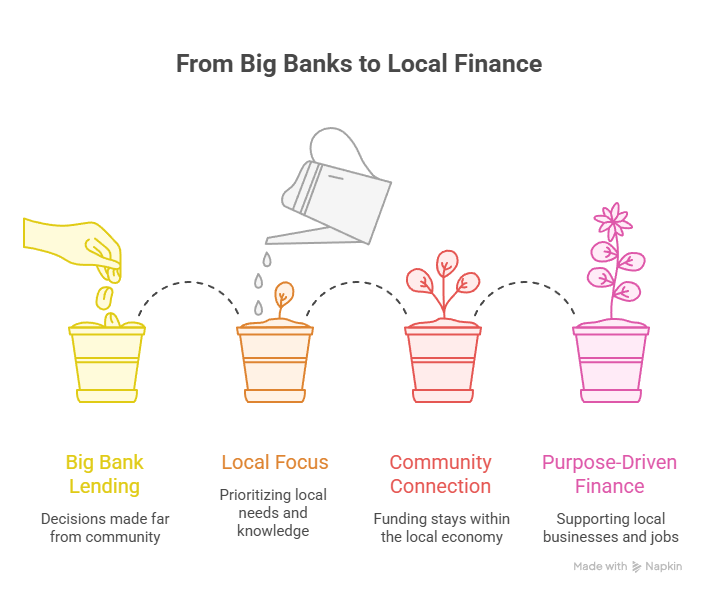
If you want a local economy that feels alive, you need money moving in the right places. Purpose-driven finance can help keep that money close to home, where it can do real work for local people, small businesses, and community projects.
For readers following the Clearinghouse CDFI space, this idea is simple: money should not just sit in accounts or flow out of town without leaving much behind. When finance is tied to purpose, it can support the places people actually live, shop, work, and build.
1. It Keeps Lending Closer To Local Needs
Big banks often make decisions far from the communities they serve. Purpose-driven finance changes that by putting more focus on local knowledge, local priorities, and local outcomes. That means loans are more likely to support the bakery on the corner, the neighborhood repair shop, or the startup hiring its first two employees.
That matters because local businesses usually spend locally too. They buy supplies, hire local help, and pay for services in the same area. When funding stays connected to the community, the money keeps moving through the local economy instead of disappearing into a larger system with little local return.
This is where purpose-driven lenders stand out. They look at more than just numbers on a page. They ask what a business means to the street, the block, and the people nearby.
2. It Gives Small Businesses a Fairer Shot
If you have ever tried to get funding for a small business, you know the process can feel cold and unforgiving. Purpose-driven finance often takes a more human approach. It looks at the person behind the business, the neighborhood behind the numbers, and the long-term value of helping a company get off the ground.
That does not mean standards disappear. It’s just that the bar is more practical and more rooted in reality. A local café with loyal customers may be a stronger community asset than a large chain opening across town. A family-run contractor may need patient capital more than a flashy pitch deck needs a quick yes.
When financing is designed this way, more local owners get a real chance to grow. And when that happens, you usually see more hiring, more foot traffic, and more confidence in the local market.
3. It Supports Jobs That Stay in the Community
Jobs are one of the clearest signs that local finance is working. A funded business hires a worker. That worker rents an apartment nearby, shops at local stores, and maybe sends kids to a local school. A stronger paycheck often means stronger local spending, and that spending supports even more jobs.
This is why local finance matters so much. It funds a business plan and shapes the rhythm of daily life in a town or city.
4. It Can Help Underserved Neighborhoods Grow
Some neighborhoods have been overlooked for years. They may have fewer banks, fewer investment options, and fewer chances to build wealth. Purpose-driven finance can help close that gap by sending capital where it has been missing for too long.
That may look like financing affordable housing, community centers, health services, or neighborhood retailers. It may also mean supporting entrepreneurs who have solid ideas but limited access to traditional funding. These are often the people with the strongest reason to stay and build where they live.
When capital reaches these areas, it can fill a gap and create momentum. New businesses bring activity. Better services make neighborhoods more attractive. Over time, that can help local people feel like their area is worth investing in again.
5. It Builds Trust, and Trust Keeps Money Local
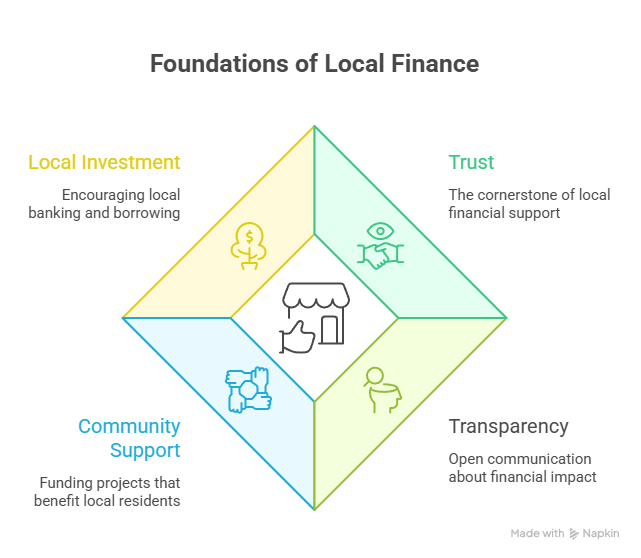
Trust is easy to overlook, but it may be the most important part of local finance. People are far more likely to support local banks, credit unions, and community lenders when they believe those institutions care about more than profit alone. They want to know their money is backing something useful.
Purpose-driven finance earns that trust by showing its work. It funds projects that people can see. It supports businesses they know. It talks about impact in a way that feels real, not polished and empty. That matters in a world where people are tired of institutions making promises they never seem to keep.
Once trust is there, people are more likely to bank locally, borrow locally, and invest locally. That keeps more money in circulation and gives the community a stronger financial base.
Why This Approach Matters Now
Local economies are under pressure from all sides. Rising costs, shifting consumer habits, and tighter credit all make it harder for small businesses to survive. At the same time, many people want to support places that feel personal, familiar, and rooted in something real.
Purpose-driven finance gives them a way to do that. It connects money with values and results. That is the part people notice. A funded shop opens. A new hire gets a paycheck. A vacant building gets a second life. Those are the kinds of wins that matter.
And unlike vague talk about “economic development,” this approach gives you something tangible to point to. It can be seen, felt, and measured in the daily life of a community.

Dexter Harlow lives and breathes celebrity culture. From red carpet moments to the latest viral gossip, he brings Hollywood to your screen with flair and insider insight. Known for his sharp wit and captivating storytelling, Dexter keeps fans hooked, delivering the hottest entertainment news before anyone else.