

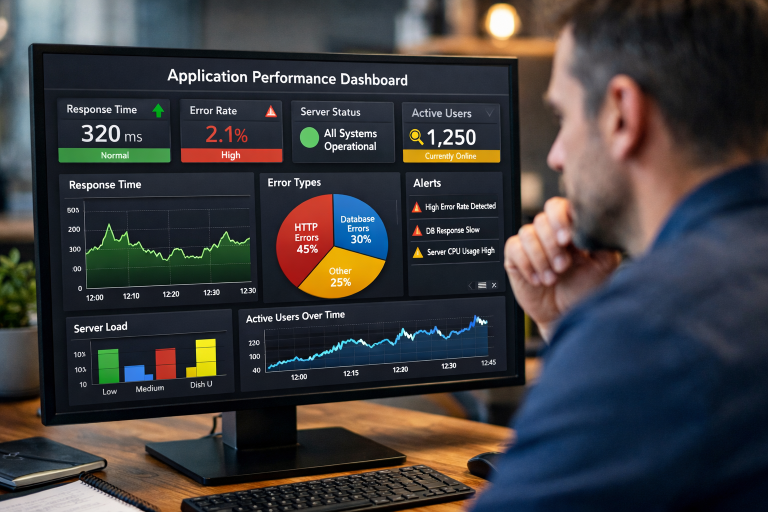
As users increasingly demand seamless digital experiences, delivering high-performing and reliable applications is now a non-negotiable. Real-time application monitoring plays a pivotal role in meeting these expectations by providing developers and businesses with actionable insights and instant visibility into the application’s health. By leveraging continuous assessment tools like eG Innovations, organizations can rapidly detect performance issues, resolve them efficiently, and create a better overall user journey.
The ability to identify and fix issues as they happen ensures that users do not encounter slow load times, errors, or system downtimes that could disrupt their experience. Furthermore, proactive monitoring minimizes the risk that small issues will escalate into business-impacting problems. This capability is especially important in today’s fast-paced environment, where application downtime translates directly into lost revenue, diminished brand reputation, and decreased user satisfaction.
Real-time APM solutions do more than simply catch problems after they occur. They empower teams to be proactive, helping them identify anomalies from memory leaks to traffic spikes before they impact end users. This continuous feedback loop is crucial as software environments become more complex and users show little patience for performance lapses.
To provide truly valuable insights, real-time monitoring must work alongside user experience data. Integrating application performance metrics with real-world user activities provides a holistic picture, allowing for better prioritization of fixes and a more targeted approach to optimization.
Understanding Real-Time Application Monitoring
Real-time application monitoring is the continuous collection and analysis of an application’s performance metrics, including response time, error rates, throughput, and resource usage. This approach contrasts with traditional point-in-time health checks, providing a dynamic view that evolves with every user interaction. Engineering and IT teams can instantly observe the performance impact of updates, new feature rollouts, or usage changes, limiting downtime and helping deliver frictionless experiences to end users.
Benefits of Real-Time APM
Implementing modern real-time APM yields a range of benefits that extend well beyond basic uptime monitoring:
- Immediate Issue Detection: Because monitoring runs continuously, performance bottlenecks or outages are detected the moment they occur. Teams are notified in real time with alerts, ensuring swift responses that prevent cascading failures and reduce incident severity.
- Enhanced User Experience: Reliable and fast applications promote positive user engagement. Monitoring tools highlight trends such as slow transactions and help reduce the frequency and impact of outages or service degradation.
- Proactive Performance Optimization: Access to live performance data enables teams to identify inefficient code, misconfigured servers, and unanticipated traffic patterns. Issues can be remediated before users even notice, allowing IT to deliver service that meets and often exceeds expectations.
Integrating APM with User Experience Metrics
The most effective APM solutions combine backend metrics with real-user monitoring (RUM) and synthetic transactions to provide a holistic view. This unified approach tracks the interplay between infrastructure performance and end-user behaviors, including clicks, page load times, and transaction completions. Metrics like Apdex scores and session duration connect technical performance to business outcomes, helping organizations understand not just when problems occur but how they affect real people. Prioritization becomes more strategic, with fixes directed first at issues that impact the most users or the most business-critical features.
Moreover, integrating synthetic transactions with user experience metrics enables continuous testing of business-critical workflows in real time. This additional layer allows teams to capture and analyze potential issues that real users might never report, such as edge-case failures or behavioral anomalies under high concurrency. With this comprehensive information, organizations can build more resilient applications that consistently exceed user expectations, reducing churn and strengthening market position. Combining advanced synthetic monitoring with real user insights delivers sustainable high performance and helps teams identify new optimization opportunities throughout the application’s lifecycle.
Real-World Applications
Across sectors from e-commerce to financial services, businesses are seeing real results from real-time APM. Online retailers, for instance, monitor checkout paths to instantly detect slowdowns or failures. Financial platforms track trade execution times and latency during market surges. Healthcare providers ensure patient portals remain accessible, even during peak demand. Case studies and statistics abound, with organizations reporting fewer user complaints, increased customer retention, and overall stronger business performance as a direct result of proactive monitoring strategies.
Choosing the Right APM Solution
The ideal APM platform provides end-to-end visibility, robust real-time alerting, simple integration with existing systems, and meaningful dashboards for both technical and business stakeholders. Scalability is essential to support business growth, while extensibility ensures that the tools remain relevant as your architecture evolves. Organizations should seek solutions that not only provide a snapshot of their current state but also deliver predictive analytics and recommendations for future improvements.
Implementing Real-Time APM
Establishing real-time monitoring involves several key steps:
- Define Key Performance Indicators (KPIs): Begin by identifying the metrics critical to both performance and user experience, such as error rates, transaction times, and user satisfaction scores.
- Set Up Monitoring Tools: Deploy the APM tools that best fit your infrastructure and integrate necessary plugins or agents to gather comprehensive data.
- Establish Alerting Mechanisms: Configure alerts that notify the right people instantly if a critical threshold is crossed or a user-impacting incident occurs.
- Regularly Review and Optimize: Schedule frequent reviews of monitoring data to identify long-term trends and opportunities for deeper optimization or architectural changes. Adopting a feedback-oriented culture, as recommended by resources such as Gartner’s APM guide, supports ongoing improvement.
In addition, it is beneficial to invest in ongoing team training and documentation as part of a successful implementation strategy. This ensures all stakeholders, from technical staff to business decision-makers, fully understand how to interpret monitoring data and take prompt action when anomalies are detected. Training also helps maintain a consistent approach as teams grow and new technologies are introduced, ensuring a seamless transition and maximizing the value of your APM investment.
Conclusion
Delivering a high-quality user experience is non-negotiable for modern digital businesses. Real-time application monitoring is the linchpin that allows organizations to reliably meet and exceed user expectations, proactively address technical issues, and foster both brand loyalty and operational resilience. Investing in robust APM processes and technology will help ensure that your users always experience your applications at their best.

Dexter Harlow lives and breathes celebrity culture. From red carpet moments to the latest viral gossip, he brings Hollywood to your screen with flair and insider insight. Known for his sharp wit and captivating storytelling, Dexter keeps fans hooked, delivering the hottest entertainment news before anyone else.